In Conversation: Prof Juliette Pattinson
We sat down with Prof Juliette Pattinson and quizzed her about how she got to where she is now.
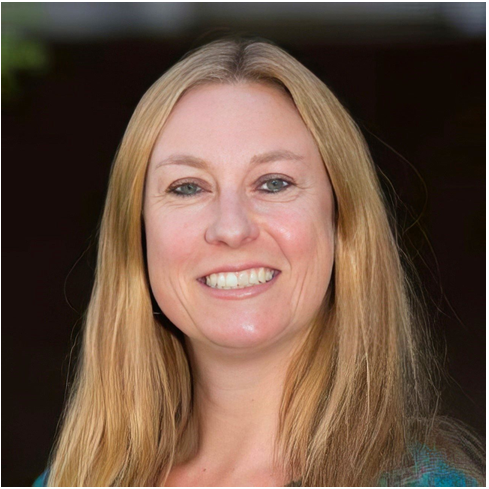
We sat down with Prof Juliette Pattinson and quizzed her about how she got to where she is now.
Who have been the most influential academics on your professional career?
I undertook all my degrees in History and Women’s Studies at Lancaster University, having been enthused by a female history teacher at school and also hearing Prof Bev Skeggs talking about the representation of women in film at a Sociology A level conference. I was so fortunate to have been taught by inspirational female academics at Lancaster, including Profs Sara Ahmed, Linda Woodhead, Janet Finch and especially Penny Summerfield. I was interested in early modern history up till that point and it was Penny, an expert on British women and the Second World War, that set me on the path I am still on. Penny went on to be my supervisor for my Masters dissertation and encouraged me to undertake a Ph.D, even suggesting a topic, and as the new Chair for the Social History Society she invited me to serve as the Honorary Secretary, which was great experience. Penny is an inspirational mentor and I’m delighted we’re still in touch, nearly thirty years later.
What got your into your field of study in the first place?
I was reading an article by Dorothy Sheridan about the different roles women played in the Second World War and one section was on resistance workers. I knew instantly that was the topic on which I wished to write my MA dissertation. I was fortunate to interview a female Dutch resister. My Ph.D was on SOE, a British Second World War organisation that recruited women as well as men to work in Occupied France. I was privileged to interview about 100 people who worked in the organisation and I am still using those doctoral interviews in my research and teaching today. I often wonder what I’d be doing now professionally if I hadn’t read that article. I doubt I would have gone on to do a doctorate.
What was your path to where you are now?
I never planned for a career in academia. I saw a poster on the back of a loo cubicle, ‘have you thought about doing a Masters?’ I hadn’t! My Masters dissertation supervisor encouraged me to embark on a Ph.D. Nearing completion, and now entirely institutionalised, I applied for a 9-month lectureship in Gender and War at the University of Wales, Bangor. It felt like the role was written for me. I handed my Ph.D manuscript in the day that I drove to Bangor to commence the job. I was then appointed to a one-year post at the University of Strathclyde. I secured a one-year extension and was encouraged to apply for external funding to extend my contract. I was fortunate to secure 14-months ESRC funding and I transferred onto an ongoing contract. I was there nine years, later becoming Head of Department. I was then headhunted by the University of Kent, and following appointment encouraged to apply for a succession of senior management roles: Head of School, Deputy Director and then Director of the Division of Arts and Humanities, serving on the Executive Group. After eleven years at Kent, King’s College London approached me about the Professor of War Studies post. It has been so energising to return to teaching and research after so long in senior management. As I reflect on the path I have taken, I am struck by the fact that I seem never to have actually made a conscious active decision! Opportunities arose and I took them. It’s worked out very well. And I’m hugely appreciative of my good fortune.
What are you currently reading and are you enjoying it?
Throughout my teaching career, I have given History lectures on narrow topics that build towards a focused module (on the British Home Front in the Second World War, Persecution in Nazi Germany, Life in Vichy France for example.) In my new role in the Department of War Studies at King’s, I am convening modules with broad themes that speak to an interdisciplinary audience: the Global Experience of War and People at War. I have elected to draw on various historical and contemporary case studies in each lecture. I have read a lot of IR scholarship this year, including the work of Laura Sjoberg on gender and conflict. Over the last couple of weeks, I have been preparing for lectures on communities at war, divergent interpretations of a civil war, gendercide and memorialisation. I immersed myself in texts about El Salvador, Yugoslavia, Rwanda and Japan. One of the books was Shelley Saywell’s Women in war: first-hand accounts from World War II to El Salvador, featuring testimony from two women who were given pseudonyms as the war was ongoing when the book was published in 1985. This book has been sitting on my shelf unread since my Ph.D. While harrowing to read, it was a fascinating portrait of women’s strategies in guerilla warfare and their resilience despite experiencing extreme brutality. Returning to books gathering dust on the shelves can often be pretty rewarding. That said, sitting on my desk and next to be read is the 2025 publication Madam War Criminal: Biljana Plavšić, Serbia’s Iron Lady by Olivera Simić.