January Digest:
January offers a natural moment for reflection and recalibration, and we begin 2026 by looking back at the year just passed.

January offers a natural moment for reflection and recalibration, and we begin 2026 by looking back at the year just passed. Our opening post, 2025 in Review, brings together reflections from DRN Committee members on a year marked by professional milestones, methodological experimentation, teaching, collaboration and significant personal change. These reflections remind us that defence research is not only shaped by strategic agendas and institutional priorities, but also by the people who carry out this work and the lives they lead alongside it.
As the year unfolds, January’s posts also signal the DRN’s continued commitment to fostering an inclusive, interdisciplinary and globally connected research community. This month we have shared opportunities for engagement, including a call for papers on intimacy, gender and (para)military identities, alongside community contributions that foreground the value of lived experience and ethical listening in defence research. Together, these pieces underline the importance of widening whose knowledge counts and how it is produced.
We also continue our regular features that situate defence research within broader strategic conversations. January’s listening list turns to airpower, alliance politics and the evolving dynamics of the war in Ukraine, reflecting on how power is projected, sustained and contested across the Euro-Atlantic space as the conflict enters another year.
As we move into 2026, the Defence Research Network remains committed to creating space for reflection, debate and exchange across disciplines, career stages and geographies. We are grateful to all those who contribute their work, ideas and time to the DRN, and we look forward to sharing new themes, conversations and collaborations in the months ahead so please do get in touch at defenceresearchnetwork@gmail.com if you have work, events or opportunities you would like us to feature in a future theme.
Tegan Lily Harrison
Editor, Defence Research Network
Theme of the Month: 2025 in Review
Reflections from the DRN Committee
We began January by looking back at 2025, a year that marked another period of growth, activity and reflection for the Defence Research Network. In 2025 in Review, DRN Committee members shared personal and professional reflections on the year just passed, offering insight into the lived realities behind defence research, teaching and practice.
Contributions highlighted milestones ranging from doctoral completions and fellowships, to experimental methodologies, teaching in professional military education, media engagement, and international collaboration. Together, these reflections reminded us that defence research is shaped as much by people, relationships and life events as by outputs and institutions. As we move into 2026, the DRN remains grateful to its Committee members and wider community for their continued commitment and generosity. Read the reflections here.
Events and News from the Community
January also featured a strong set of community-focused posts. We shared a Call for Papers for The Intimate Front: Marriage, Gender, Relationships & (Para)military Identities, an upcoming British Commission for Military History conference to be held at King’s College London in June 2026. The call invites interdisciplinary work exploring intimacy, family life and relationships across military and paramilitary worlds. Read that call here.
We also featured The Knowledge That Endures, a reflective piece by Martin Thorp, which powerfully argued for the importance of veteran voices in defence research. The post underscored the ethical and analytical value of listening beyond injury narratives to capture meaning, identity, pride and endurance in veteran experience. Read Martin's submission here.
In addition, we highlighted the Latin American Network of Interdisciplinary Studies and Research in Defense (RLAID), introducing its scholars and research agenda and encouraging connections between DRN members and colleagues working across Latin America on the human dimensions of defence. For more on RLAID, read the post here.
Serving with Equity: Women’s Voices in the Uniformed Public Services
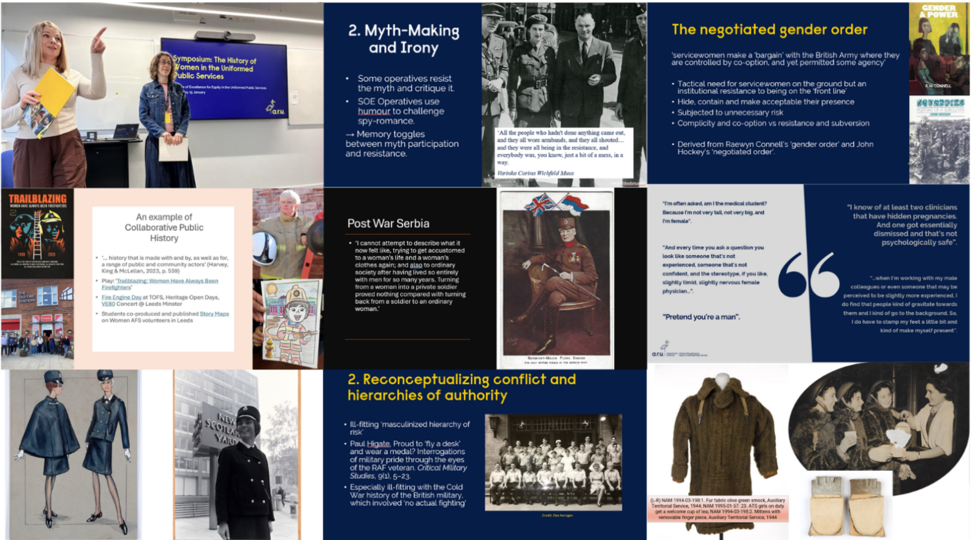
The Centre for Military Women’s Research (CMWR) and the Centre of Excellence for Equity in Uniformed Public Services (CEEUPS) at Anglia Ruskin University will host a joint two-day conference on 31 March–1 April 2026 at the Cambridge campus. The event brings together national and international speakers and themed panels exploring women’s experiences across the military and other uniformed public services, with a particular focus on equity and intersectionality, alongside networking opportunities. For more information see the post here.
What We’ve Been Listening To: January 2026
This month, our listening focused on airpower, alliance politics, and strategic endurance as the war in Ukraine enters another year. The selected episodes explore how power is projected, constrained and sustained across the Euro-Atlantic space.
Airpower and strategic influence in Washington.
A discussion of how airpower shapes US strategic thinking, advisory influence and defence decision-making.
Assessing the state of the war in Ukraine at the end of 2025.
An evaluation of battlefield dynamics, strategic stalemate and what the coming year may hold.
Greenland as an emerging transatlantic security flashpoint.
An analysis of Greenland’s growing strategic importance amid great-power competition in the Arctic.
Europe’s capacity to sustain support for Ukraine.
A Q&A exploring political will, frozen Russian assets, and whether Europe can continue to sustain financial and political support for Kyiv’s defence.
You can find links to all podcast episodes in our post.
 Veronika Hinman
What We’re Reading: January 2026
January’s reading brings together two books that examine contemporary war from different but complementary perspectives: its human consequences and its strategic organisation.
Human Costs of War: 21st Century Human (In)Security from 2003 Iraq to 2022 Ukraine by Bulent Gokay and Lily Hamourtziadou adopts a human security lens to explore how conflict shapes civilian lives in Afghanistan, Iraq and Ukraine. Focusing on personal, economic, political and community security, the book foregrounds civilian harm, displacement and long-term social impact, arguing that war should be understood primarily through its effects on those who live with its consequences.
Alongside this, Defence Planning for Small and Middle Powers: Rethinking Force Development in an Age of Disruption, edited by Tim Sweijs, Saskia van Genugten and Frans Osinga, examines how states adapt defence planning and military innovation amid strategic uncertainty. Drawing on international case studies, it develops a new typology of defence planners and offers insights into how smaller powers align ambition, partnerships and innovation in a disrupted security environment.
Find out more and access links to both books in our post.
 Veronika Hinman
Get involved with the DRN
Get in touch
We hope you've enjoyed our news, tips and recommendations. In case you missed our previous newsletter editions, check out our archive section here. Over the coming months we'll be transferring our past content to the new website.
We're always looking to showcase early-career researchers in research and their work, so don't be shy in getting in touch, and we welcome any suggestions for 'In Conversation' pieces with more established academics. And don't forget to let us know about any events you, or your departments, schools and Universities might be hosting in the near future, from book launches to webinars.